
Why Protect The Peel
FOR NATURE AND WILDLIFE
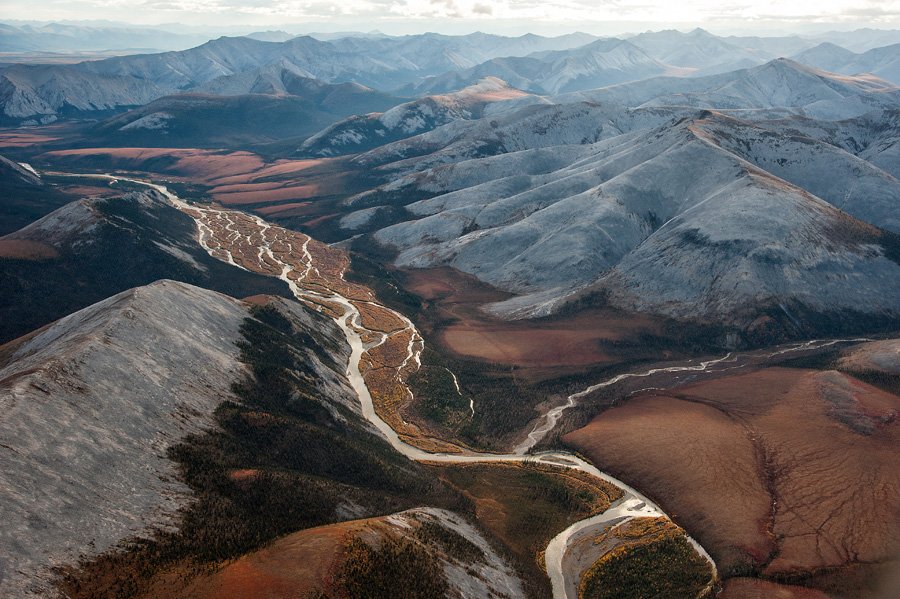
The geographical diversity of the Peel Watershed is perhaps unparalleled in North America, from rugged mountain ranges and deep canyons, to sweeping alpine tundra, boreal forest, and expansive wetlands. The six crystal-clear rivers that flow into the Peel River – the Ogilvie, Blackstone, Hart, Wind, Bonnet Plume, and Snake Rivers – are the lifeblood of the watershed, traveling north to the Arctic Ocean via the Mackenzie River Delta.
The size of the Peel Watershed cannot be understated, with no permanent settlements and only a single road on its western edge. The limited human disturbance has allowed for unrivalled ecological integrity in this 68,000 square kilometre wild space. Many animal species found here are listed as being of conservation concern nationally or internationally. Owing to its ecological significance, the Peel Watershed forms the northern anchor of the Yellowstone to Yukon corridor, which would ensure connectivity for wildlife moving south to north.
Much of Canada’s iconic wildlife thrive in the Peel, from predators like the grizzly, wolf, wolverine and lynx, to ungulates such as moose, dall sheep, and caribou. The Peel Watershed has been recognized as a global benchmark for predator-prey relationships, and opening up the watershed to roads and mineral exploration would threaten this delicate ecological balance.
The Peel is home to multiple herds of woodland boreal caribou, a species that is classified as ‘threatened’ nationally under Canada’s Species at Risk Act. Barren-ground caribou are also found here: the Porcupine Caribou Herd journeys through the Peel in the winter on the way to their calving grounds in Alaska, completing the largest annual land mammal migration on Earth.
Not only does the Peel provide critical habitat for large mammals, but smaller wildlife such as beaver, porcupine, collared pika, pine marten, singing vole, and river otter also populate the landscape.
The mix of habitat types is also a haven for birdlife, from raptors like eagles, short-eared owls, and the once endangered peregrine falcon, to boreal songbirds such as the blackpoll warbler and the rusty blackbird. The abundant wetlands of the Peel Plateau are critical to the migration pathways of the millions of birds and waterfowl that stop over in the Yukon during fall and spring journeys, including the surfbird, American golden plover, and northern shoveler.
Much of the Peel Watershed was not glaciated during the last ice age, which has contributed to its unique biodiversity. Many rare fish and plant species have been discovered in the Peel, and the western portion of the Peel has the highest number of endemic plant species in all of Canada.
FOR FIRST NATIONS
“The caribou and the rivers of the Peel watershed are the lifeblood of this land and of the Gwich’in nation.” Bruce Charlie, Chief of the Vuntut Gwich’in First Nation
The Peel Watershed is the traditional territory of three Yukon First Nations (Na-Cho Nyäk Dun, Tr’ondëk Hwëch’in, and Vuntut Gwitchin) and the Tetlit Gwich’in of the neighbouring Northwest Territories. It is a major part of the cultural identity of these nations, and for some, it continues to be crucial to their way of life.
The physical and spiritual significance of the Peel has compelled First Nations to lead the court battle with the Yukon government. They view protecting the land as a responsibility inherited from their ancestors and an obligation to future generations who will depend on the land. Yukon First Nations with traditional territory in the Peel Watershed are calling for the Final Recommended Plan to be adopted.
While the Peel Watershed has largely been spared from industrial development to date, people have relied on the Peel for millennia. Historically First Nations people have lived, occupied and travelled in all corners of the region, and the plants, medicines, and animals have been integral to their subsistence livelihoods. Throughout the Peel there are numerous hunting trails and burial sites, as well as archeological evidence of caribou fences, abandoned settlements, and trading posts. The rivers and mountains of the Peel are a key part of First Nations heritage, reflected in stories and their deep knowledge of the land.
There are no permanent settlements in the Peel today, but residents from the nearby communities of Dawson City, Mayo, and Fort McPherson continue to spend time on the land hunting, gathering, fishing, and trapping. These subsistence practices are important as First Nations determine their own balance between western and traditional choices.
The Vuntut Gwitchin of Yukon’s most northerly community, Old Crow, identify as a ‘caribou people’ – their primary food source is the Porcupine Caribou Herd, which travels through the Peel each year. Oil and gas development in the caribou’s range could devastate their way of life. Likewise, the Tetlit Gwich’in of Fort McPherson depend on a clean and healthy Peel River to sustain their diet of fish. The community is concerned about how pollution from upstream mining operations would threaten the fish and their future.
The fight to Protect the Peel is not just about the land, but also about Indigenous rights. The previous Yukon government’s rejection of a seven-year land-use planning process was not only a betrayal of public confidence, it was a violation of the modern-day treaties. Through the Protect the Peel campaign and legal case, Yukon’s First Peoples defended their right to be heard by government and to have a genuine say in the future of the land they have lived on since time immemorial. The legal case was the first-ever case representing both First Nations and environmental organizations that was heard at the Supreme Court of Canada.
FOR SUSTAINABLE ECONOMIC DEVELOPMENT
The land use planning process for the Peel Watershed revealed that Yukoners value the ecological and cultural aspects of the Peel above its mining potential. In its recommendation, the planning commission was able to strike a balance by allowing for 20% industrial development, but it found that any additional resource extraction would fundamentally jeopardize those characteristics which people had identified so strongly.
Resource industries such as oil and gas and mining can bring wealth and employment, but often the benefits are overstated and accrue primarily to outside interests rather than local communities. Mining can also leave behind environmental scars – something as simple as a road can alter habitat and wildlife habits forever. To give nature the room it needs to breathe, we must leave some spaces off limits to industry, especially those with high ecological and cultural value. The Peel Watershed is one of those spaces.
By implementing the Final Recommended Plan to protect 80% of the watershed, we can create a balanced future for nearby communities through sectors that make use of nature without damaging it.
Protected areas contribute to the local economy by ensuring clean air and water, as well as plentiful fish and wildlife to sustain traditional fishing, hunting and trapping practices. A conservation focus also generates economic opportunities through wilderness tourism.
Tens of thousands of people travel within the Yukon and from afar every year to explore its natural beauty. Intrepid paddlers, trekkers, and hunters value the Peel for its remoteness and its unspoiled splendour. To experience the Peel, they require guides, equipment, food, accommodations, travel, and a range of other services that can create local business and employment opportunities, particularly for First Nations. Research, conservation management, and ecological monitoring can also provide ‘green jobs’ in a globally significant region like the Peel.
While a national or territorial park in the Peel is not being proposed at this point, protected areas open many possibilities for communities to grow sustainably, to have control over their own economic development and to benefit from their expertise. In Canada and around the world, there are emerging examples of Indigenous leadership in protected areas. The Peel could be the Yukon’s chance for a progressive approach to address conservation, reconciliation and economic development altogether.