
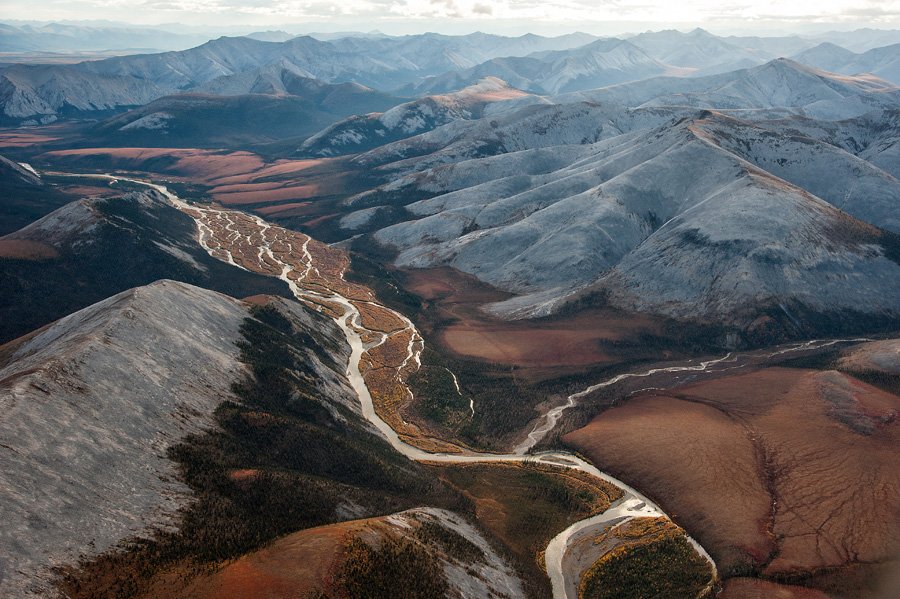
At over 68,000 square kilometres of rugged northern beauty, the Peel Watershed in northern Yukon is one the most expansive wild places in the world. For the four First Nations who call it home, the clear rivers and majestic mountains of the Peel have provided physical and cultural nourishment since time immemorial.
The Peel Watershed also contains deposits of oil, gas, coal, uranium, and other minerals. For years, the people of Yukon had to push back on the Yukon government’s efforts to carve up the region with mining, drilling, and roads. First Nations and conservation groups took their fight all the way to the Supreme Court of Canada, eventually winning a historic verdict that secured protection for this special place.
An Endangered Wild Space in Canada’s North
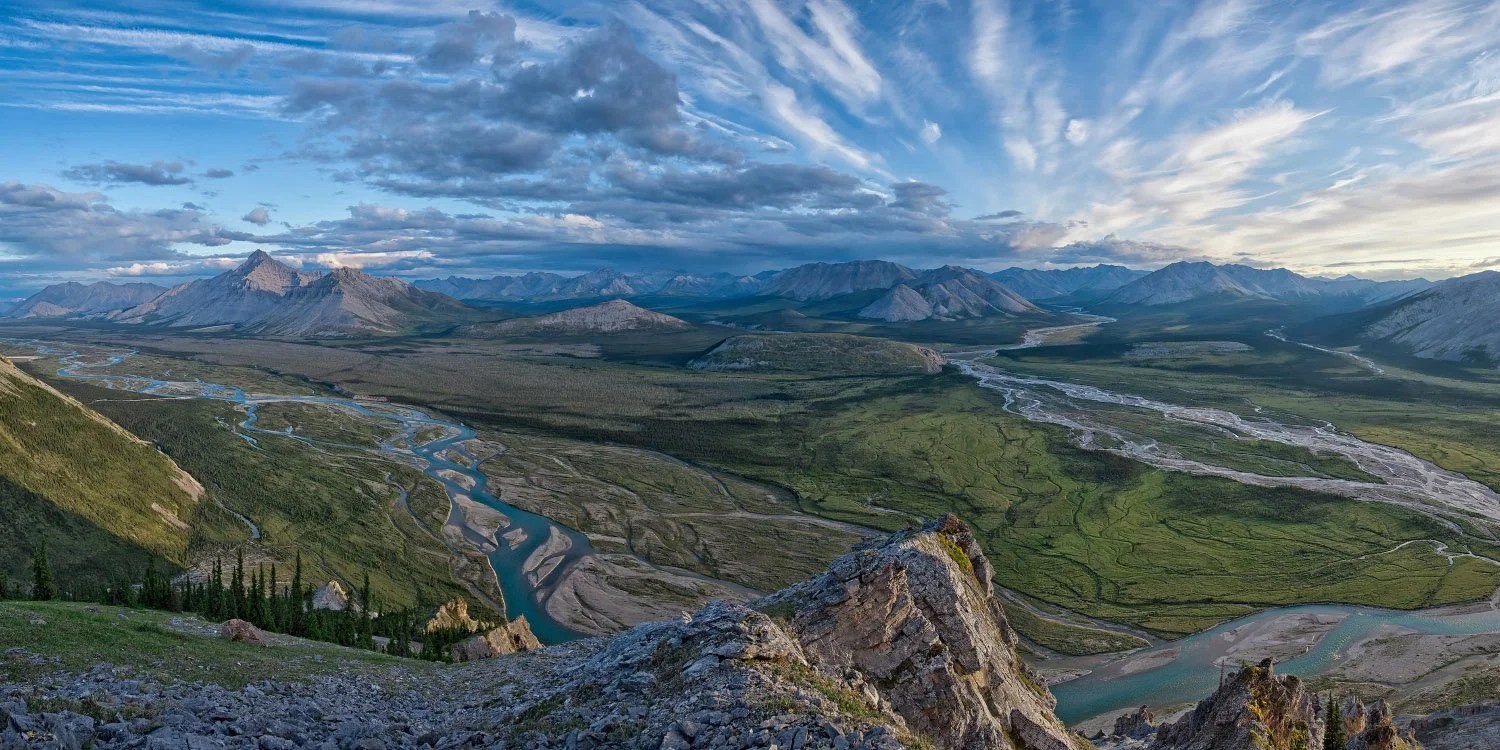
From its dramatic mountain peaks and sweeping sub-Arctic tundra, to its sprawling alpine meadows and sweeping boreal forests, the Peel is a rare place where nature seems almost limitless. The watershed is formed from the Peel and its six main tributaries, gathering rainfall and snowmelt from the highest peaks of the Mackenzie Mountains in the south, all the way to the Tombstones and the Blackstone Uplands in the north.
Grizzlies, wolves, moose, caribou, and lynx roam free on this wild land, and millions of migratory birds find sanctuary in the abundant wetlands during their epic seasonal journeys. The Porcupine Caribou Herd, which make the longest migration of any land mammal on Earth, winter in the Peel before resuming their marathon journey to the Arctic. The wild landscapes of the Peel are a refuge for plants and animals who must adapt to the disruptions brought on by climate change.
First Nations and the Peel Watershed
“We have seen enough environmental damage to our homeland. We need a plan that protects the land permanently.” - Former Tr’ondëk Hwëch’in Chief Eddie Taylor.
The Peel Watershed is the traditional territory of three Yukon First Nations – the Na-Cho Nyäk Dun, Tr’ondëk Hwëch’in and Vuntut Gwitchin – as well as the Teetl'it Gwich’in of the neighbouring Northwest Territories. For thousands of years, these Indigenous groups have hunted, fished, travelled, and lived through all corners of the Peel Watershed, reflected in age-old stories and deep knowledge of the land. Throughout the Peel are numerous hunting trails and burial sites, as well as archeological evidence of abandoned settlements and trading posts.
In 1993, Yukon First Nations and the governments of the Crown signed the Umbrella Final Agreement. This landmark treaty ushered in a new era for relations between many Yukon First Nations and the governments of Canada and the Yukon. The Nations who signed the Umbrella Final Agreement made major concessions, including relinquishing any claim to land title across most of their traditional territories. In return, the Crown governments recognized First Nations title for a small percentage of Settlement Lands, and agreed to a land use planning process, with the goal of reaching collaborative decisions about the future of the Yukon’s land. In 2004 land use planning began for the Peel, and soon ignited what became the Protect the Peel campaign.
Our Journey to the Supreme Court of Canada
The Final Agreements signed with the Government of Yukon and the Government of Canada guarantee First Nations a decision-making role on their traditional territory, including the Peel Watershed. Even before land use planning began for the Peel, First Nations elders were advocating for 100% protection of the region. Over the course of seven years, the Peel Watershed Land Use Planning Commission conducted extensive research and consultation with communities and stakeholders to produce a Peel Watershed Land Use Plan. This ultimately recommended that 80% of the region be off-limits to roads and industry. This plan was supported by First Nations and a huge majority of Yukoners.
Then the Yukon government derailed everything. They rejected the Final Recommended Plan and approved a different plan that it had developed unilaterally. This new plan would have opened 71% of the Peel to industrial development and left just a small portion protected. This betrayal sparked legal action from the affected First Nations, CPAWS Yukon, and the Yukon Conservation Society.
The Yukon government's disregard for the First Nations agreements and the ecological integrity of the Peel brought together Yukoners in unprecedented ways, with rallies, demonstrations, and fundraisers across the territory. 'Protect the Peel' bumper stickers began to populate people's vehicles and the Peel emerged as a top issue in the Yukon Legislature and during elections.
In 2014, the Yukon Supreme Court ruled that the Yukon government violated its constitutional obligations. However, a subsequent Court of Appeals decision granted the government a do-over on its misconduct, leaving the door open to widespread development in the Peel. First Nations and environmental groups appealed this ruling, and brought the case to the Supreme Court of Canada in March of 2017. At stake was the interpretation of Yukon’s modern-day treaties, and whether the wild spaces of the Peel Watershed would be protected for future generations.
Supreme Court of Canada Ruling
The Supreme Court of Canada unanimously ruled that the Yukon government violated the Umbrella Final Agreement. The Court ordered the Yukon government to go back and complete meaningful consultations, based on the Final Recommended Land Use Plan for the Peel Watershed, the one that would protect 80% of the watershed. The Court ordered that only minor modifications to the plan could be made, and only ones that upheld the “Honour of the Crown” in its relations with First Nations. The ruling by the Supreme Court of Canada was an incredible victory for the affected First Nations, the Yukon Conservation Society, CPAWS Yukon, and the Yukon as a whole.
These final consultations took place in the fall of 2018. From there, the Yukon government and the Peel First Nations negotiated the Final Land Use Plan for the Peel Watershed. The Plan was officially signed into being on August 22nd, 2019, at a ceremony in Mayo. The Final Plan protected 83% of the Watershed, and ensured that the Plan would be jointly implemented between the Yukon government and the Peel First Nations. The Plan was the realization of decades of work from people across the North, united by a shared dedication to the wellbeing of the land, wildlife, and of Northern communities.
“The environment is not for sale. And economic necessity will not supersede environmental destruction.”
— Simon Mervyn, Chief of the First Nation of Na-Cho Nyak Dun
Supporters
First Nations
Plaintiffs in the legal case
First Nation of Na-Cho Nyäk Dän
Tr’ondёk Hwёch’in
Vuntut Gwitchin First Nation
Interveners in the legal case
Council of Yukon First Nations
Gwich’in Tribal Council*
The Teetl'it Gwich’in from the Northwest Territories have traditional territory in the Peel and have depended on the land for millennia, which is is recognized in a transboundary agreement. The Gwich’in Tribal Council is a land claim organization representing the interests of approximately 2700 Gwich'in people in the Mackenzie Delta of the Northwest Territories, including the Teetl'it Gwich’in.
The Public
7,500 Canadians (mainly Yukoners) signed a petition supporting the Final Recommended Plan released by the Peel Watershed Planning Commission in 2011 that would have protected 80% of the Peel.
Over 4,500 people have signed the Peel Pledge (launched in June 2016) to express their solidarity with First Nations and environmental groups in their appeal to the Supreme Court of Canada to have the Peel protected.
Conservation and Environment Organizations
Plaintiffs in the legal case
Yukon Conservation Society
CPAWS Yukon
Other Organizations
CPAWS and its 13 chapters across Canada
Trails Only Yukon Association
Wildlife Conservation Society
Yukoners Concerned about Oil and Gas Development
Yellowstone to Yukon Conservation Initiative
Boreal Songbirds Initiative
Peel Youth Alliance
Yukon Businesses
Businesses that have contributed to the campaign in various ways from donating time and energy, to fundraising items, to public endorsement for Peel protection.
Alpine Bakery
Aroma Borealis
Bean North
Breath of Life Studios
Cabin Fever Adventures
Equinox (Adventure Tours)
Erica Heuer Yoga
Midnight Sun Outfitting
Nahanni River Outfitting
National Outdoor Leadership School
Sila Sojourns - Wilderness and Creative Journeys
Tourism Industry Association of the Yukon
Up North Adventures
Wilderness Tourism Association of Yukon
Walden’s Guiding and Outfitting
Widrig Outfitters Ltd.
Wilderness International Inc.
Wilderness Tourism Association of Yukon
Yoga Whitehorse
Yukon Artists, Musicians, Photographers, Videographers
The following artists have donated their time, skills and works of art to the Peel campaign over the years.
AK Studios
Bearbait (Tanya Handley)
Christoph Fischer Photography
Fritz Mueller Visuals
Jannik Schou Photography
Jodie Thomson Design
Joyce Majiski Art
Matthew Lien Music
Marten Berkman Productions
Marty O’Brien Video Productions
Peter Mather Photography
Robert Postma Photography
Save Our Lands Conservation Photography
Stephanie Ryan Art
Wally Maltz Design
Yukon Artists at Work Co-operative
Leaders and Luminaries
The following leaders have spoken out in support of protecting the Peel
Margaret Atwood
Maude Barlow
Tzeporah Berman
Olivia Chow
Bill McKibben
Buffy Sainte-Marie
Sandy Silver, Premier of Yukon
David Suzuki